
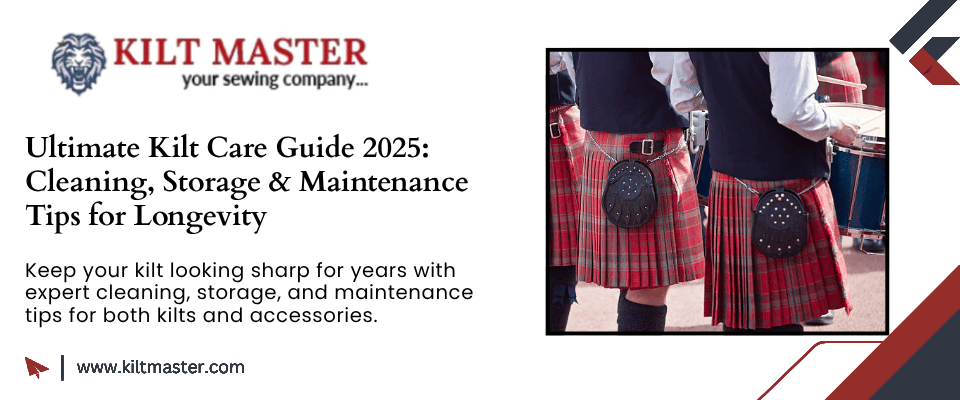
Kilts are a timeless investment, crafted with high-quality materials and traditional craftsmanship. Proper care not only preserves the fabric but also enhances the longevity of its design, allowing you to enjoy your kilt for men for decades. This comprehensive guide covers cleaning, storage, and maintenance tips for both kilts and their accessories.
Cleaning and Washing Your Kilt
Different kilt materials require different cleaning methods. Improper washing can damage the pleats, shrink the fabric, or fade colors.
Wool Kilts
- Dry Clean Only: Wool kilts should be dry cleaned to avoid shrinkage.
- Spot Clean for Minor Stains: Use a damp cloth and gently blot without rubbing.
- Air Between Wears: Hang your kilt in a well-ventilated area to release odors.
Synthetic Kilts
- Machine Washable: Use a gentle cycle with cold water.
- Air Dry Only: Avoid using a dryer to prevent heat damage.
- Low Maintenance: Less prone to wrinkles and fading than wool.
Hybrid Kilts
- Follow care instructions for both wool and synthetic sections.
- When in doubt, dry clean to preserve the pleats and shape.
Comparison: Wool vs Synthetic vs Hybrid Kilts
| Kilt Type | Cleaning Method | Durability | Maintenance |
|---|---|---|---|
| Wool | Dry Clean Only | High | Medium |
| Synthetic | Gentle Machine Wash | Medium | Low |
| Hybrid | Mostly Dry Clean | High | Medium |
Storing Your Kilt
Proper storage is essential to prevent wrinkles, fading, and fabric damage.
- Use a Kilt Hanger: Specialized hangers with clips keep pleats aligned.
- Avoid Folding: Folding causes creases and weakens pleats.
- Cool, Dark Storage: Protects fabric from sunlight, humidity, and pests.
Maintaining Kilt Accessories
Your kilt accessories are as important as the kilt itself. Here’s how to maintain them:
Sporrans
- Leather Sporrans: Wipe with a damp cloth and condition regularly.
- Fur Sporrans: Brush gently and keep away from moisture.
Kilt Pins
- Polish: Use a soft cloth and metal cleaner sparingly.
- Attach Properly: Pin only the top apron to avoid holes.
Belts and Buckles
- Leather Belts: Apply conditioner to prevent cracks.
- Metal Buckles: Polish before special occasions.
Shoes (Ghillie Brogues)
- Clean and Polish: Maintain leather shine regularly.
- Replace Worn Laces: Keeps shoes neat and functional.
Seasonal Kilt Care Tips
- Summer: Air kilts frequently and store in breathable garment bags.
- Winter: Use cedar blocks or moth repellents for wool kilts.
- Travel: Roll your kilt along the pleats and store in a garment tube.
FAQs About Kilt Maintenance
Q1: How often should I dry clean my kilt?
A: Only when visibly soiled or after 5–6 wears; frequent dry cleaning can weaken fibers.
Q2: Can I iron my kilt at home?
A: Yes, on low heat with a pressing cloth, but avoid direct contact with wool fibers.
Q3: How long can a well-maintained kilt last?
A: High-quality kilts can last 15–20 years, and heirloom pieces can last generations.
Q4: Can I store my kilt in plastic?
A: Avoid long-term plastic storage; use breathable garment bags to prevent moisture buildup.
Conclusion: Protecting Your Kilt for Years to Come
Proper kilt care preserves both the fabric and its heritage. By cleaning, storing, and maintaining your kilt and accessories carefully, you ensure that your investment remains timeless. Whether it’s a wool, synthetic, or hybrid kilt, these maintenance practices will keep it looking sharp and ready for any occasion for years to come.
For more information, visit:




