
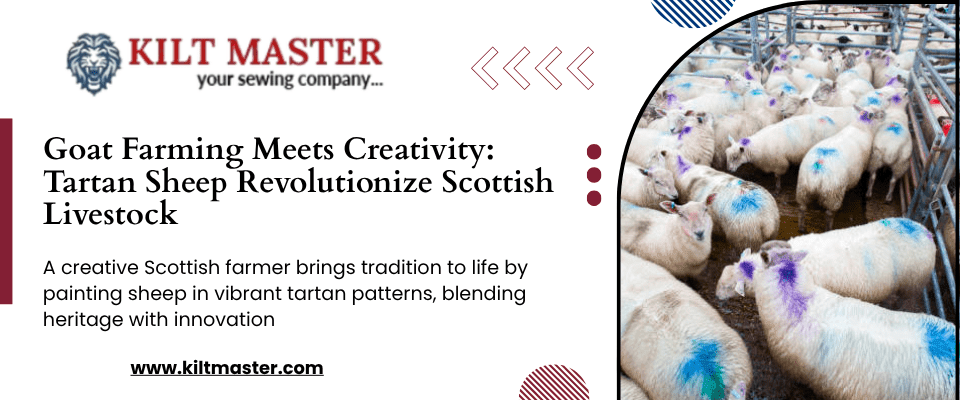
Goat farming has long been a revered custom in Scotland's scenic hills. But one creative farmer has given her livestock routine a splash of color by spray-painting her sheep with a lively tartan design. Both residents and visitors are drawn to this singular fusion of creativity and history, which piques their interest in the antiquated farming methods as well as the contemporary artistic flare incorporated.
A New Take on Tradition
In rural Scotland, where farmers have reared livestock for generations, goat and sheep husbandry have ancient roots. Strong breeds that can survive inclement weather and flourish in the natural environment can be found on the rough terrain of the Highlands. Farmers in this context usually put pragmatism and efficiency first. Nonetheless, a Scottish farmer made the decision to fuse art and custom by turning her flock into living paintings, each of which proudly displayed the distinctive tartan check pattern.
The Art of Painting Sheep
This farmer meticulously paints her sheep's beautiful tartan design using non-toxic, animal-safe spray paint. The procedure pays homage to Scotland's rich cultural past rather than being merely a silly, entertaining exercise. Scotland's identity is deeply rooted in its tartan, a symbol of its clans and past. The farmer transforms her sheep into moving works of art by painting them in this pattern, which not only honors her heritage but also adds color to the rural landscape.
Practical Benefits of Painted Sheep
There is a utilitarian aspect to this artistic project. It might be difficult to identify animals in big flocks, particularly in expansive landscapes. The farmer can clearly identify her sheep from other animals by giving them a coat of paint. Despite being unorthodox, this method makes her flock easier to maintain and helps her sheep stand out—visually and symbolically. These sheep also steal the spotlight at local farm fairs, helping spread awareness of sustainable livestock practices and Scottish tradition.
Comparison: Traditional Sheep vs Tartan Sheep
| Feature | Traditional Sheep | Tartan-Painted Sheep |
|---|---|---|
| Identification | Ear tags, color codes | Easily recognized visually |
| Community Engagement | Limited | High (attracts tourists/media) |
| Aesthetic Appeal | Natural wool color | Colorful tartan patterns |
| Educational Value | Minimal | Sparks cultural & farming talks |
| Show/Event Popularity | Moderate | Frequently the star attraction |
| Cost & Maintenance | Low | Slightly higher (paint, time) |
Goat Farming and Modern Innovation
Goat farming in Scotland, much like sheep farming, represents resilience and tradition. Goats are prized for milk, meat, and fiber production. While goats aren’t painted like the tartan sheep, Scottish goat farmers are also finding creative ways to innovate—whether through organic feeding, tech-assisted breeding, or eco-friendly shelters. The intersection of tradition and creativity makes modern Scottish farming dynamic and engaging.
Social Media Buzz
The tartan sheep have become a global internet sensation. Photos and videos of them grazing have gone viral on platforms like Instagram, TikTok, and Facebook. Visitors eagerly travel to the farm just to see these uniquely styled sheep. Social media has played a vital role in raising awareness of not only this fun initiative but also the cultural richness of Scottish agriculture.
Educational and Cultural Impact
- Cultural Revival: Sparks curiosity about Scottish clans and tartan heritage
- Agricultural Awareness: Educates the public about livestock care and rural life
- Creative Farming: Inspires other farmers globally to explore innovative approaches
- Tourism Boost: Brings footfall to otherwise quiet farming communities
FAQs
Q1: Is the paint harmful to the sheep?
A: No. The paint used is non-toxic, animal-safe, and designed to wash off over time.
Q2: Do the sheep mind being painted?
A: The process is gentle and carefully done. The sheep are not harmed or distressed.
Q3: How long does the tartan paint last?
A: Depending on weather and the sheep’s activity, the paint usually lasts 2–4 weeks.
Q4: Do goats also get painted in tartan?
A: No, currently only sheep are painted. Goats are part of the farm but are managed traditionally.
Q5: Can people visit the farm?
A: Yes! Visitors are welcome to see the tartan sheep and learn more about Scottish farming.
The Future of Farming: Tradition with a Twist
Farming methods in Scotland are evolving rapidly. The tartan sheep phenomenon represents more than just artistic expression—it’s a symbol of how tradition and innovation can beautifully blend. Farmers are now recognized not just as food producers, but as cultural curators, educators, and community builders. This approach encourages youth and modern thinkers to consider farming as a creative, sustainable, and meaningful career.
Conclusion
The combination of goat farming and the creative tartan sheep is a perfect example of how tradition and modernity can coexist. This Scottish farmer’s artistic twist has brought joy to the community and attention to agricultural heritage. In a world focused on productivity, these sheep remind us of the beauty, imagination, and identity that rural life still carries—and how even sheep can wear a little pride on their woolly sleeves.
For more information, visit:




