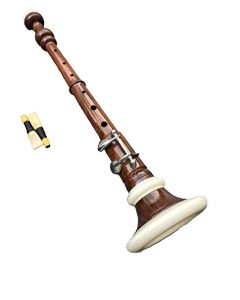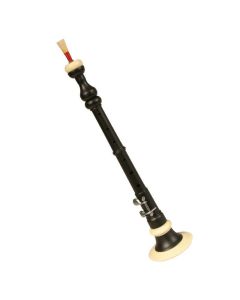
Bombard Chanters

Musical

View as Grid List

2 Items

Set Descending Direction
per page

Bombard Chanters — A Majestic Wind Instrument Rooted in History and Power

Bombard Chanters are extraordinary wind instruments known for their loud, continuous sound and bold presence. With a distinct cylindrical shape, flared bell, and robust design made typically from brass or bronze, they command attention in both sound and appearance. These chanters are not just instruments; they’re carriers of rich European history, echoing through time from the Middle Ages to today’s ceremonial and musical traditions.

The Bold Voice of Heritage — Sound & Technique

The unique voice of a bombard chanter is shaped by how it is played. The musician blows air into a mouthpiece, creating a resonant buzzing sound through a metal reed. The vibration of lips, paired with precise airflow and mouth shaping, allows skilled players to control pitch dynamically across a two-octave range.

This design enables the bombard to create a steady rhythm, making it ideal for marching, dancing, and commanding attention during public performances. Its ability to cut through ambient noise makes it especially valued in military bands, folk ensembles, and ceremonial music.

Cultural and Historical Impact — From Warfare to Court Music

The name “bombard” originates from the French term for warfare, referencing its booming, warlike tone and cannon-shaped body. Initially popularized in European town squares by town pipers and military units, bombard chanters played a crucial role in medieval and Renaissance ceremonies.

As music evolved, court musicians embraced the bombard for its richness and ceremonial gravity. Though it saw a decline in the 18th century, the 19th and 20th centuries brought a renewed interest, particularly in folk traditions and historical re-enactments.

Modern-Day Relevance — Tradition Meets Performance

Despite their ancient origins, bombard chanters are still used today, celebrated for their deep connection to cultural identity. Musicians perform solo pieces or collaborate with instruments like the piano or drums to offer layered, compelling performances. Whether as part of an ensemble or featured in solo showcases, the bombard remains a testament to the strength and endurance of traditional music.

Its continued presence in military parades, cultural festivals, and educational settings reinforces its authoritative value in music history. Bombard chanters are not only played — they are passed down, studied, and revered.

Frequently Asked Questions

1. What is a Bombard Chanter? +
A Bombard Chanter is a traditional wind instrument known for its powerful, continuous tone, widely used in folk, military, and ceremonial music.
2. How is it played? +
The player blows into a metal reed via the mouthpiece. Lip vibration and controlled air pressure create the instrument’s signature buzzing sound.
3. What materials are used to make Bombard Chanters? +
They are commonly made from brass or bronze, which gives them their durability and strong, resonant sound.
4. Where did the Bombard Chanter originate? +
The bombard originated in medieval Europe, particularly in France, and was used in military bands and public celebrations.
5. Why is it called a "Bombard"? +
The name comes from the French word for "warfare" and reflects both the shape of the instrument and its booming, cannon-like sound.
6. What is the typical range of a Bombard Chanter? +
Most bombard chanters have a two-octave range, allowing for dynamic melodies in both solo and group settings.
7. Is it still played today? +
Yes, bombard chanters are actively used in traditional Breton music, reenactments, and folk ensembles around the world.
8. What type of music suits the Bombard Chanter? +
It fits well in military marches, traditional folk music, and cultural ceremonies. It can be played solo or with drums and piano.
9. Can beginners learn to play it? +
Yes, although it requires good breath control and practice, beginners can learn with proper guidance and training.
10. How does it differ from other wind instruments? +
Its bold sound, use of a metal reed, and historical roots set it apart from other woodwinds, making it ideal for outdoor and ceremonial use.

What Clients Say

Rating
80%

They said they sent an email with a question about my address that I never received an it took 5 weeks to het here. Then it was the wrong pattern and way too big. Will be order from them again.

Profile image
Timothy Costello
Rating
100%

Communication was good and the sales associate was helpful, but delivery still took around two weeks. The kilt was nice and reasonably priced. Might order again, but fully impressed.

Profile image
County Cork
Rating
100%

My kilt finally arrived and I’m happy with it. It fits very well, the tartan is exactly what I ordered, and the belts and accessories are nicely made. Good quality overall. Thanks!

Profile image
Stephen Newman
Rating
100%

I've ordered Doublets from them for years. This time, it took weeks to arrive. The quality was okay, but not what I expected, and sizing felt off. Hoping for better consistency next time.

Profile image
James McLeod